
Paying for groceries with a QR code, buying shares through an app, or comparing insurance plans online has become much easier. You no longer need to visit an office for every financial task. Much of it can be done from your phone.
Fintech companies have helped make this possible. They use technology to make payments, investing, lending, and other financial services easier to access.
In July 2026, UPI processed 2,366 crore transactions (about 23.7 billion), which is the highest monthly volume since its launch in 2016, according to the Ministry of Finance. Around 2026, the daily average has been more than 66 crore payments. Look at what lies within those numbers: PIB’s decade review says that about 86% of person-to-merchant UPI payments are below ₹500. That is the chaiwallah at the corner, the vegetable vendor, the cab driver and the student splitting a restaurant bill. A phone-first way of handling money has become part of everyday life. In this article we will learn about the top fintech companies in India.
Quick Answer:
The fintech industry in India is growing rapidly, making digital payments, lending, insurance and investing more accessible. Leading companies such as PhonePe, Razorpay, Paytm, Pine Labs, CRED, Groww and Zerodha are helping individuals and businesses use financial services through technology. Each company serves a different segment, so the right choice depends on the user’s financial needs, services offered and eligibility.
Key Takeaways
- The top fintech companies in India in 2026 include PhonePe, Razorpay, Paytm, Pine Labs, CRED, Groww, Zerodha, PB Fintech (Policybazaar), Navi and LendingKart. They operate across digital payments, investing, insurance, business payments and lending.
- Each company serves a different financial need. PhonePe and Paytm focus on digital payments; Razorpay and Pine Labs provide business payment solutions; CRED focuses on credit card payments and rewards; Navi offers digital financial services; LendingKart provides small business loans; and Groww, Zerodha and PB Fintech cover investing, insurance and credit products.
- Fintech companies support the growth of digital financial services, but they also face challenges such as cybersecurity risks, regulatory compliance, customer trust and building profitable businesses.
What Is A Fintech Company
A fintech company uses technology to provide or improve financial services. The word fintech combines financial and technology.
Think about the last time you paid someone through UPI. You probably opened an app, scanned a QR code, entered an amount, and completed the payment in seconds. A digital payments platform makes this possible.
Therefore, a fintech company uses technology to provide or improve financial services. It may offer a mobile payment app, an online investment platform, a digital lending service, or software that helps businesses process payments.
However, not every fintech company is regulated by the same regulatory framework. It highly depends on the services that are provided and whether it is a regulated financial institution, an intermediary, or a technology service provider.
India’s Fintech Landscape in 2026
India’s fintech industry has grown as more people use smartphones, digital payments, and online financial services. The government data shows that the total volume of digital payment transactions increased from 2,071 crore in FY 2017–18 to 22,831 crore in FY 2024–25. This represents a compound annual growth rate of 41%.
The increase in digital payments is an important part of its growth. According to the Ministry of Finance, UPI payments have contributed around 81% of retail online payment transactions by volume in FY2024–25, making it a significant part of India’s payment system.
The Reserve Bank of India also supports financial innovation through its regulatory sandbox, which allows eligible businesses to test certain products in a controlled setting.
The Top Fintech Companies in India 2026
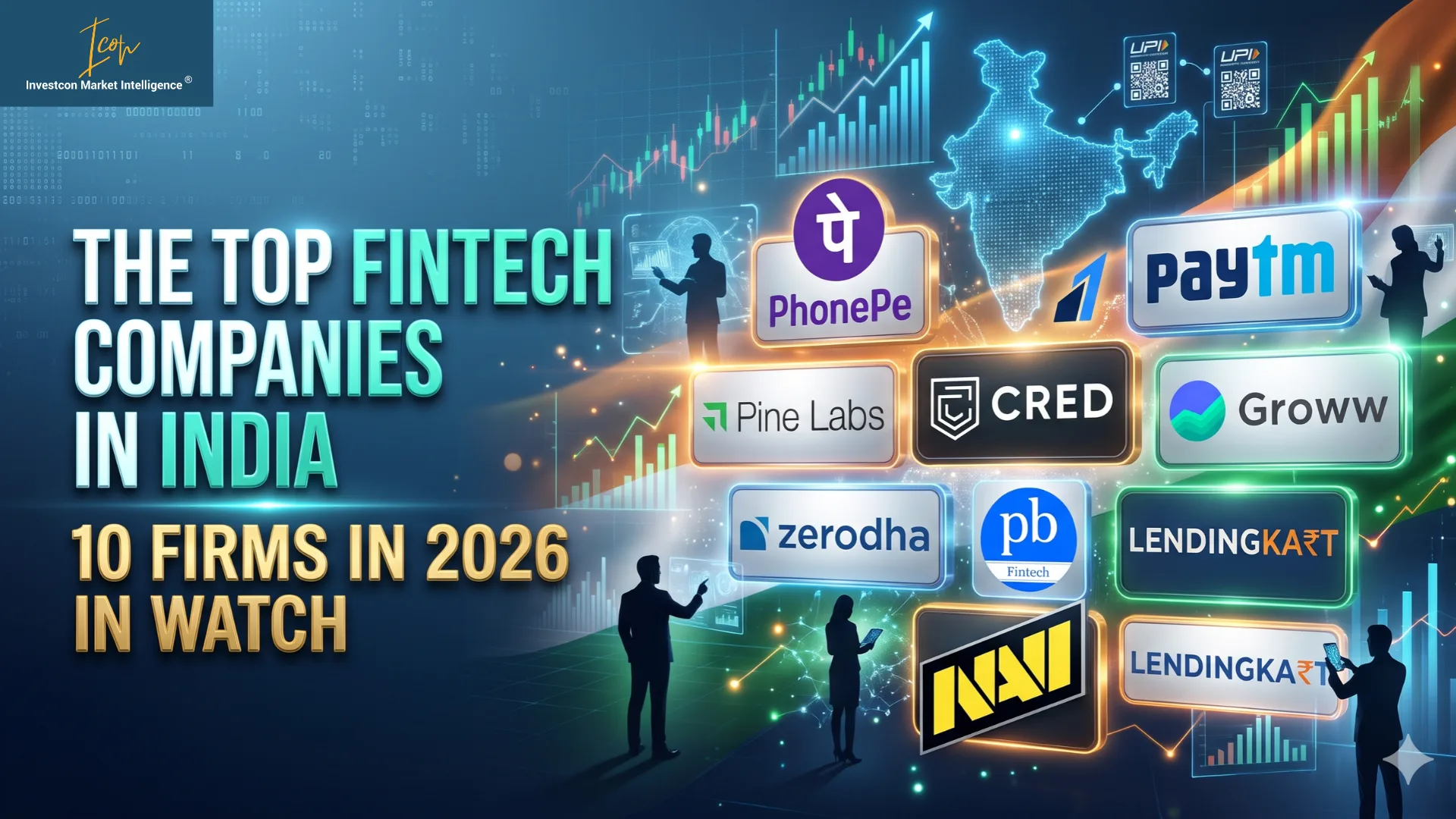
The following companies represent the top fintech companies in India. They include different segments of India’s fintech industry. Each has a distinct role, so the best choice depends on whether the need is to make payments, manage a business, invest, compare insurance, or access financing.
1. PhonePe
Have you ever paid a shopkeeper by scanning a QR code? There is a good chance you have used a digital payments app such as PhonePe.
PhonePe is referred to as one of India’s best-known digital payments platforms. It allows users to make UPI payments, transfer money, pay bills, and complete other supported transactions through its app. It also offers merchant payment solutions and distributes financial products.
In a company announcement dated 29 April 2026, PhonePe said it had crossed 700 million registered users, or 70 crore. This is a lifetime registration figure, not the number of active users. It has a large user population and a wide merchant network, and its ability to improve payment services and expand into other financial products makes it important.
2. RazorPay
Buying something online is simple when the payment goes through smoothly. Behind that checkout page, a payment service may be helping the business accept the money. Razorpay provides this type of technology.
The company’s services include payment gateways and tools that help businesses collect payments online. Hence, businesses can use these services on websites, apps, and other channels. The company’s POS received the RBI’s Payment Aggregator–Physical (PA-P) licence in January 2026, which allows it to support in-store payment processing for businesses.
For example, an online clothing store can integrate a payment gateway so customers can pay by supported methods at checkout. Moreover, a small business can also share a payment link with a customer instead of building a complete online store.
3. Paytm
Paytm, which is operated by One 97 Communications, is a digital financial services company that is known for providing mobile payments and merchant payment solutions. Its business tools also help shops accept digital payments. For example, a shopkeeper can use a QR code to receive payments or a supported soundbox to hear an announcement when a payment is completed.
Paytm’s progress depends on how well it serves merchants, develops its permitted services, and manages costs and regulatory requirements. Its ability to maintain customer trust is also important.
4. Pine Labs
Imagine paying by card at a supermarket. The payment terminal at the counter is part of the technology that helps process the transaction. Pine Labs provides payment solutions for this kind of business need, along with other digital commerce services.
Pine Labs offers payment technology for merchants, banks, and businesses. Its services include point-of-sale terminals, digital payment solutions, and technology that supports transactions across physical stores and online channels. The company operates mainly in the business-to-business side of fintech, where companies need reliable payment systems. The continued shift towards digital payments provides it opportunities to serve retailers and other businesses.
5. CRED
Keeping track of credit card bills can become difficult if you use more than one card. CRED offers services designed to help eligible members manage and pay their credit card bills.
CRED is a consumer fintech platform known for credit card bill payments and rewards for eligible members. Its services have expanded into other areas of consumer finance, including selected payment and credit-related offerings. CRED’s business depends on keeping users engaged and developing services that generate sustainable revenue. Its ability to build useful financial products around its member base will be an important factor to monitor.
6. Groww
Want to invest in stocks or mutual funds without visiting a broker’s office? Groww provides a digital platform through which users can access various investment products.
Groww’s service offerings include stocks, mutual funds, exchange-traded funds, and other products, depending on the availability and eligibility. Users can research various options, place eligible orders, and track investments through the platform.
Groww operates in India’s retail investing market. Its progress depends on customer needs, product development, competition, and its ability to maintain a sustainable business.
7. Zerodha
Zerodha is a stockbroking company known for its discount brokerage model. It gives customers online access to stocks, derivatives, mutual funds, ETFs, bonds, and other investment products.
Its Kite platform supports trading and investment activities. It also offers Coin for direct mutual fund investments and Varsity, a free learning resource covering stock markets and related topics.
Zerodha is worth following for its technology-led brokerage model and focus on investor education. Its business is affected by trading activity, competition, regulatory changes, and customer needs.
8. PB Fintech (Policybazaar)
Buying insurance can involve comparing several plans, premiums, exclusions, and benefits. Policybazaar helps customers explore and compare insurance products online.
It is part of PB Fintech, which also operates Paisabazaar, a platform focused on credit products and related financial services.
This is suitable for someone looking for health insurance who can compare certain available policies and review their coverage before making the decision. The final choice should depend on the actual policy terms, including exclusions and waiting periods, rather than just the premium.
9. Navi
Navi offers digital access to several financial services. Its offerings include UPI, loans, insurance, and mutual funds through the relevant entities. Navi operates across several areas of digital finance. Its ability to provide useful products, manage financial risks, and meet the rules that apply to each service will influence its progress.
For example, a customer may use Navi’s app for a supported payment service or explore a loan or insurance product. The entity providing the service depends on the product.
10. LendingKart
A small business may need extra money to buy stock, pay suppliers, or manage expenses before customers pay their bills. Lendingkart focuses on financing for micro, small, and medium-sized enterprises (MSMEs).
Its digital lending process is designed to help eligible businesses apply for financing online. The relevant lending entity assesses applications and decides whether to approve a loan. It operates in this market, where digital processes can make applying for financing more convenient.
Suppose a shop owner who needs working capital may explore a business loan to manage short-term expenses. The owner should compare the interest rate, fees, repayment schedule, and total borrowing cost before accepting an offer.
A Quick Comparison Table
Here is a tabular comparison of the listed top fintech companies in India.
| Companies | Main area | What it offers |
| PhonePe | Digital payments | UPI, bill payments, merchant payments |
| RazorPay | Business payments | Payment gateways, payment tools |
| Paytm | Digital payments | UPI, bill payments, merchant services |
| Pine Labs | Payment Technology | Point-of-sale systems and merchant payment solutions |
| CRED | Consumer Finance | Credit card bill payment and rewards |
| Groww | Investing | Stock, mutual funds, ETFs, and other investment portfolios |
| Zerodha | Stockbroking | Online trading, investments, and investor education |
| PB Fintech | Insurance | Insurance comparison and distribution |
| Navi | Digital financial services | Lending, insurance, UPI, and mutual funds through relevant entities |
| LendingKart | Business lending | Loans and financing solutions for small businesses |
How We Picked These Firms
The listed top fintech companies in India are selected based on their presence in important fintech segments, the relevance of their services, and their role in the country’s digital financial ecosystem.
- Range of services: Whether the company serves an important financial need, such as payments, investing, insurance, or lending.
- Practical relevance: How its products help individuals, merchants, or businesses manage financial activities.
- Industry relevance: How the company’s activities connect with wider changes in India’s fintech sector.
- Business development: Its efforts to expand products, technology, partnerships, or customer access.
- Market presence: Its visibility and role in the segment in which it operates.
The list includes both consumer-facing platforms and companies that provide financial infrastructure to other businesses. It does not imply that every company is equally large, equally profitable, or suitable for every customer.
Trends Shaping The Sector
India’s fintech sector continues to grow as more people and businesses use digital financial services. Here are five trends shaping the sector in 2026.
- Growth of digital payments: UPI has made everyday payments easier for customers and merchants. Companies are focusing on reliable transactions, better payment tools, and fraud prevention.
- Digital lending: Several online platforms allow eligible individuals and businesses to apply for loans, and it also helps ensure processes such as clear loan terms, responsible lending, and borrower protection.
- Use of AI: Fintech companies use AI to support fraud detection, customer service, and financial data analysis. Protecting customer information and checking for errors remain essential.
- Online investing: Platforms such as Groww and Zerodha make it easier to access stocks and mutual funds online. They continue to compete through simple tools, useful features, and investor education.
Challenges Faced By Fintech Companies
Fintech offers many opportunities, but companies also face challenges that can affect their customers and business results.
- Fraud and cybersecurity: Fake apps, phishing messages, and stolen account details can put customers at risk. Companies need strong security measures, while users should never share passwords, PINs, or one-time passwords with anyone.
- Regulatory changes: Companies providing payments, lending, investment, or insurance services must follow the rules that apply to their activities. Changes can affect how they operate and which products they offer.
- Customer trust: Any hidden charges, confusing terms, or poor complaint handling can damage a company’s reputation. Clear information and reliable support are important for long-term growth.
- Making a profit: A large number of users does not guarantee a profitable business. Companies need enough revenue to cover technology, staff, customer support, marketing, and compliance.
Conclusion
India’s fintech industry focuses on making payments, investing, insurance, and borrowing easier through technology. The top fintech companies in India, such as PhonePe, Razorpay, Groww, and Zerodha are changing how people and businesses can utilise financial services. However, their long-term growth also depends on customer trust, regulatory compliance, and the ability to earn profits.
Want to explore the world of investing? Looking to build trust and connect with your target audience? At Investcon Market Intelligence, we help fintech companies create clear, useful, and research-backed financial content. From explaining financial products to simplifying complex market topics, we create content that helps businesses educate their customers, build credibility, and reach the right audience.
FAQs
Q: Which are the top fintech companies in India?
Ans: Some notable fintech companies in India in 2026 include PhonePe, Razorpay, Paytm, Pine Labs, CRED, Groww, Zerodha, PB Fintech (Policybazaar), Lendingkart, and Navi. They operate in different areas, including payments, investing, insurance, and lending. This is a selected list, not a ranking.
Q: How do fintech companies make money?
Ans: Fintech companies may earn money through payment processing fees, brokerage charges, software services, subscriptions, loan interest, or fees for distributing financial products. Their revenue sources depend on their business models and the services provided by their respective entities.
Q: Are fintech companies in India regulated by the RBI?
Ans: Some fintech activities fall under RBI regulation, including certain payment and lending services. Stockbroking falls under the relevant securities regulations, while insurance is governed by the applicable insurance framework. Not every fintech company is directly regulated by the RBI. Check the legal entity and its registration for the specific service you plan to use.
Q: Which fintech companies focus on digital payments?
Ans: PhonePe and Paytm are well-known digital payment platforms. Razorpay provides payment solutions for businesses, while Pine Labs offers merchant payment technology and point-of-sale systems. Their services differ depending on whether the customer is an individual or a business.
Q: Which fintech companies provide investment services?
Ans: Groww and Zerodha provide access to investment products such as stocks and mutual funds, subject to their respective offerings. Zerodha is also known for its online trading tools and Varsity investor education platform. Customers should compare fees, features, eligibility, and risks before choosing a service.

Raksha is a BBA LL.B. graduate specialising in Corporate Law from Delhi, with over six years of experience in financial writing. She specialises in financial markets, investments, mutual funds, taxation and personal finance. With a strong foundation in legal research and a keen eye for detail, she focuses on translating complex financial concepts into accurate, accessible and engaging content.