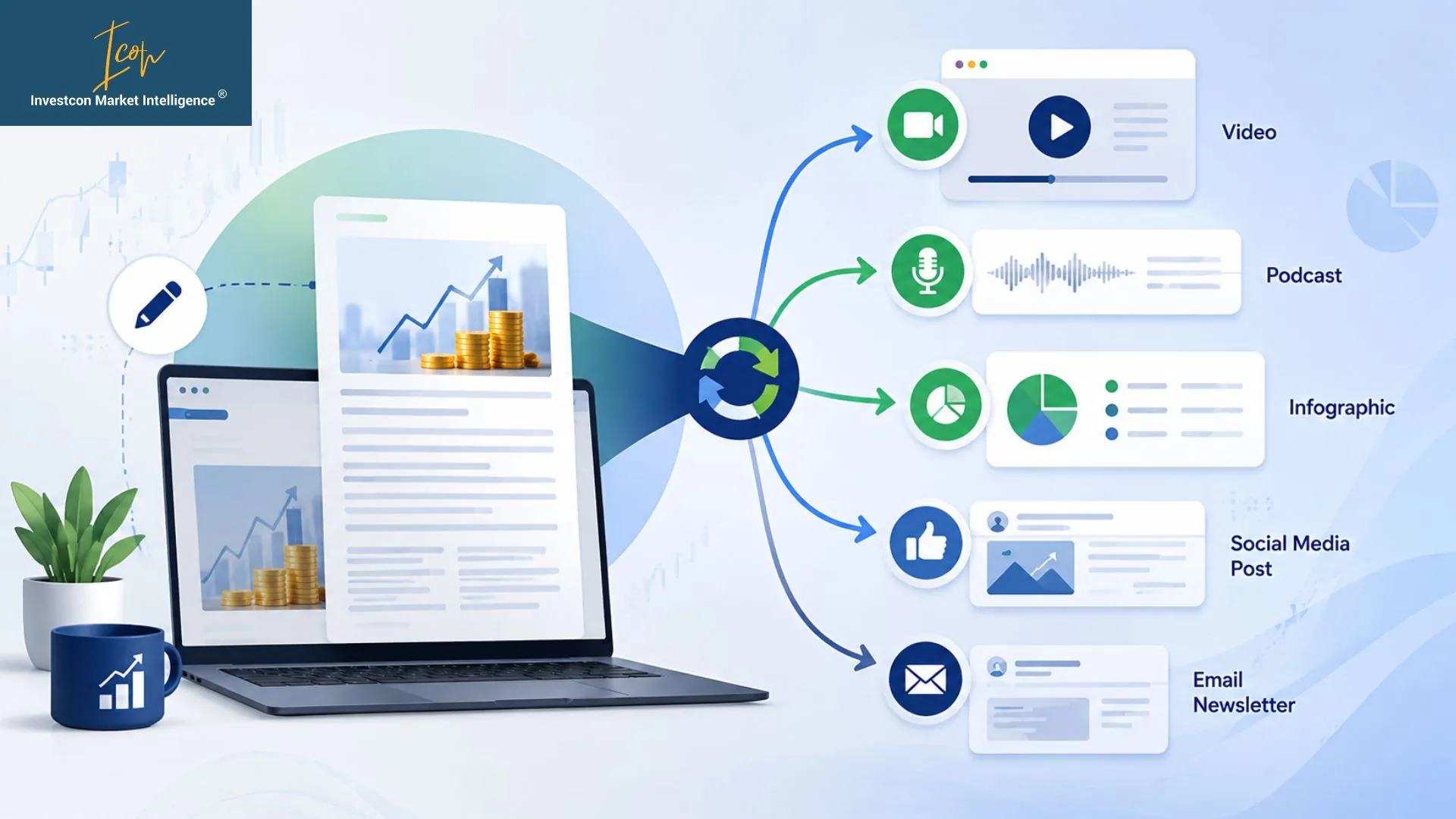
Financial brands spend weeks, sometimes even months, developing market forecasts, research papers, and compliance surveys. Besides being time-consuming, primary research is also expensive. Only publishing them once can be a huge loss of a precious asset.
Repurposing allows a financial brand to get value out of research that was already created by the brand. One good report provides enough material for a whole month of content marketing for financial services, if a brand understands how to split it up. Finance brand marketing can be made more efficient and economical through repurposing.
What is Content Repurposing
Content repurposing refers to the transformation of a single piece of content, like research, survey, white paper, etc, to different content types for distinct platforms and target audiences.
For example, XYZ published a report on “Saving Habits of Gen Z in 2026”. After publishing the report, they published a blog on the same topic for their website, created reels and shorts about Gen Z savings on Instagram and YouTube, etc.
Repurposing a report is different from promoting it. In the case of promotions, content is curated to increase viewers or citations of the published report. However, repurposing means converting a report into unique content verticals like a blog, video script, or slide presentation. It helps tailor the report information to meet the unique consumption pattern of different audience sub-groups.
Why Financial Brands Should Prioritise Content Repurposing
Understanding of financial content repurposing is incomplete without exploring why it is needed. Discussed below are different reasons why content marketing strategy involves repurposing:
- Expensive production: Financial research requires extensive capital outlay for generating or collecting raw data, employing subject matter experts for analysis, compliance and other reviews, etc. Repurposing is crucial for optimising this cost.
- Trust is built through repeated exposure: Decisions regarding finances are critical, and the audience does not respond to a single touchpoint alone. Repeated exposure of the same expertise via blogs, LinkedIn articles, and newsletters creates the familiarity necessary to build trust. Repurposing ensures that a brand can use high-value content like reports for various content segments that can increase brand presence across platforms for a longer time.
- Higher ROI: The process of repurposing reduces the cost of production from being associated with one output to ten outputs. Content repurposing statistics reflect that repurposed content generates lower cost per engagement than fresh content.
Repurposing: Different Types of Content From One Report
A single flagship report can contain enough raw material for multiple content assets. Content marketing for financial services must be able to mine suitable information and brainstorm its different creative forms. Explained here are different types of content formats that can be repurposed from a single report for an efficient content marketing strategy.
- Long-form SEO Blog Article
Extend the key findings of the report into a long-form, keyword-rich blog post with additional context. Brands can add examples that can explain the research better. An optimised blog can help gain sustained traffic from organic sources and evergreen SEO performance beyond the initial launch period.
- LinkedIn Thought Leadership Post
Convert each statistic, chart, and insight found within the report into separate thought leadership posts on LinkedIn. The curation can be in the voice of the founder or advisor to give a personality to the brand.
- Short Educational Video
Generate short 30-to-90-second videos featuring the most notable findings, such as industry trends, taxes, and misconceptions about investments, from the report. Short videos can gain high-volume interactions if curated with a high-performing hook.
- Weekly Email Newsletter
Turn your report into weekly takeaways instead of a single lengthy review. This strategy helps people engage multiple times and have something to look forward to in upcoming newsletters.
- Infographics
Represent data like percentages, comparisons, and timelines in the form of an infographic. Such content can be shared via LinkedIn, WhatsApp, and other social media platforms, besides internal circulation with clients.
- Webinar or Live Session
Convey information through a live session or webinar where there is some opportunity for a Question and Answer (Q&A) round. Live sessions are also one of the most powerful ways to generate leads.
- Podcast Episode
The brand can host a podcast discussing the report, its findings, and interpretations. This can help the brand tap into new audience segments and explain their stance.
- Social Media Carousel
Break down complicated ideas through slide-by-slide explanation. This content format is suitable for platforms like LinkedIn and Instagram. It allows people to go through a structured argument.
- Sales Enablement Content
Transform insights from the report into a presentation, brochure and other sales content material, which enables relationship managers to speak about the same thing without paraphrasing it in each client meeting.
Best Practices for Financial Content Repurposing
Here are some key strategies financial brand marketing can adopt for effective repurposing:
- Comply with regulations: Every new format, no matter how simple, must go through the compliance check just like the original report.
- Write to fit the format rather than copy: The text of a LinkedIn post should not be the same as the text of a blog post. Rewrite the text based on the medium.
- Context matters: Data from a report taken out of context may lead to misleading information. Preserve the context around every statistic you use.
- Maintain evergreen content: Content in blogs or checklists based on a report requires updates as time passes.
- Measurement is key: Keep track of which formats and topics generate efficient traffic and leads. Apply that intel to curate future content plans.
Build a Sustainable Content Repurposing Workflow
Here is a step-by-step framework for a content repurposing workflow:
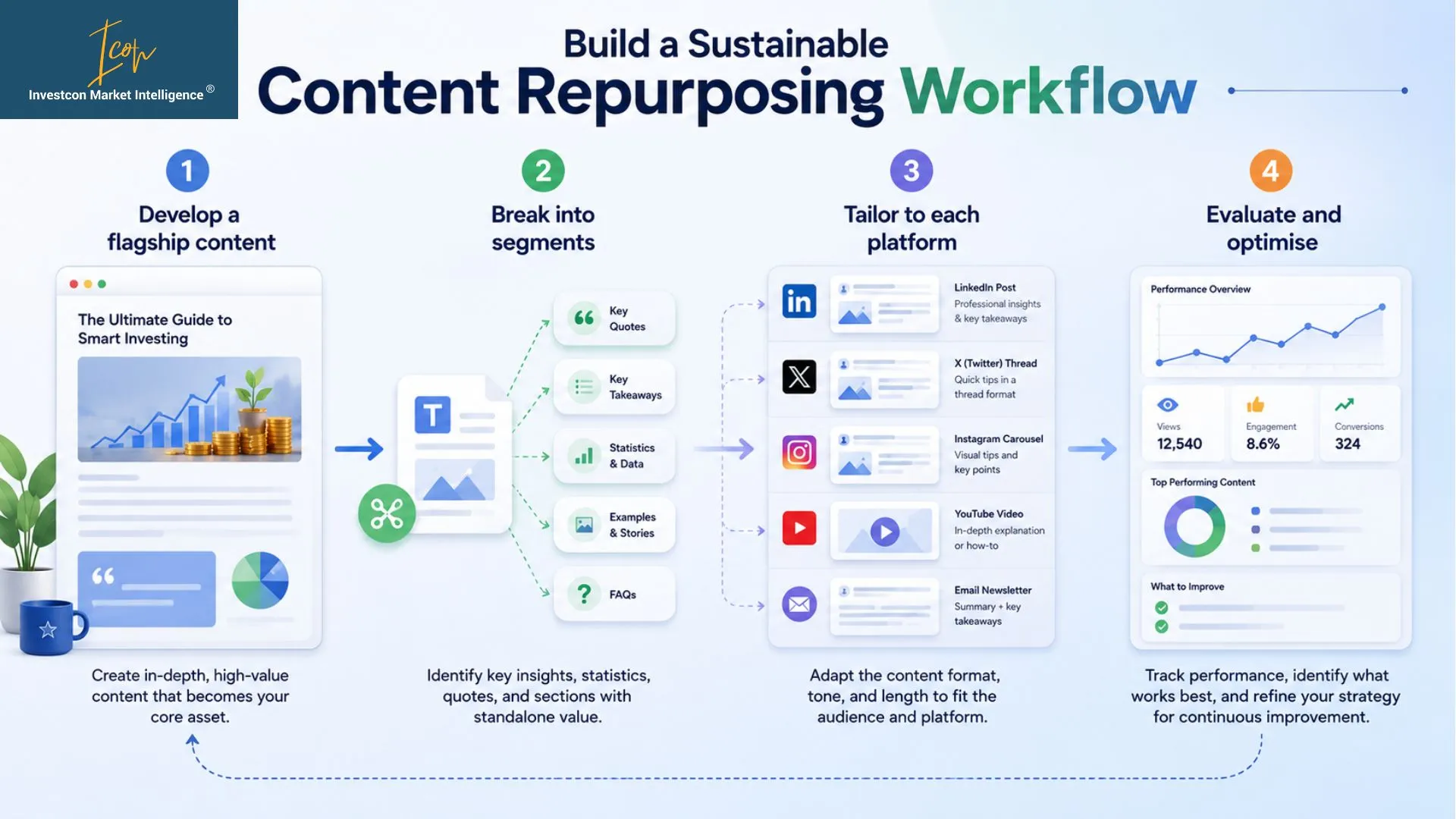
- Develop a flagship content: Begin by creating a detailed report, white paper, survey, or market outlook that will become the basis for future content.
- Break into segments: Spot important insights, statistics, FAQs, or trends that can be developed into separate pieces of content.
- Tailor to each platform: Create different types of content from those insights, like blog posts, LinkedIn articles, videos, newsletters, infographics, or webinars, according to the respective platform.
- Evaluate and optimise: Ensure that the content is compliant with regulations and guidelines and consistent with your brand. Monitor the effectiveness of this content marketing strategy.
Conclusion
Repurposing financial reports is among the most economical means of financial brand marketing. Social media and internet algorithms don’t only reward quality but also consistency. Repurposing helps create several content assets for a long tenure based on quality reports. However, such repurposing is efficient when curated by teams that carry technical fiscal and content marketing know-how. Expert finance writers at Investcon help curate engaging financial content that creates traffic and results. Visit Investcon today!
Key Takeaways
- One flagship report can realistically generate several distinct content assets across formats and channels.
- Repurposing improves ROI on already-expensive financial research and supports a stronger financial brand marketing presence.
- Trust in financial content builds through repeated exposure, not a single publish.
FAQs
1. Does repurposed content hurt SEO due to duplicate content?
No, as long as each piece is meaningfully rewritten for its channel and not copied verbatim, repurposing does not adversely impact SEO. Search engines penalise duplication, not the reuse of underlying ideas.
2. How do compliance teams review repurposed content efficiently?
Many brands pre-approve a bank of report statistics and claims during the original review, so later formats can be cleared faster without a full re-review each time.
3. What tools help with repurposing financial content efficiently?
The kind of tools required depends on the nature of content a brand wants to produce. For instance, video content might require only editorial calendars, simple design tools, and basic video editing apps. The bigger requirement is a documented workflow that helps repurpose content from the original report.

- 2 Bar Reversal Indicator - August 31, 2026
- Insurance Content Writing: How to Explain Policies Without Losing Readers - August 17, 2026
- Why Every Wealth Management Firm Needs an Industry Report (Not Just a Blog) - August 12, 2026