Every financial decision a person takes, whether it’s selecting an insurance policy, a loan, or a mutual fund, is based on trust. Consumers today are much more knowledgeable and sceptical. Audiences are growing increasingly averse to promotional noise. Furthermore, the added risk and long-term commitment of financial services increases the importance of trust. Therefore, in such a scenario, there is little room for communication error. One false statement by a finance brand can ruin years of goodwill.
This is where content marketing for financial services makes a difference. It assists companies in educating their audience first and selling later, resulting in building trust and value. This article examines realistic methods for financial businesses to include content marketing that fosters brand trust in all aspects of their communications. A consistent strategy can result in long-term brand trust marketing that consumers genuinely remember.
Why Trust Matters More in Finance Than Any Other Industry
Financial decisions have implications that last for years, in contrast to fashion or food choices that are low-risk and readily reversed. For this reason, strong sales language or memorable slogans are not suitable for financial businesses. They must consistently ensure that they comprehend the customer’s worries and are prepared to address them. Some factors that make trust more crucial in finance are listed below:
- Scepticism or defensive reaction to financial decisions is normal, as they affect security and future aspirations.
- A bad loan or investment decision might take years to fix.
- Since most consumers don’t completely comprehend financial terms or products, they depend on the brand’s integrity.
- Strict compliance standards regulate financial communication, and any violation can lead to serious consequences.
What is Content Marketing for Financial Services
The process of producing and disseminating useful, pertinent information that aids clients in making informed financial decisions rather than pressuring them to make a purchase right away is known as content marketing for financial services. Such content marketing builds trust and stands at the nexus of education and brand creation. This strategy is based on a few related concepts.
The key distinctions between advertising and content marketing are their timing and intent. While content marketing garners attention by first fixing an issue and then allowing the sale to happen organically, advertising disrupts attention to make a sales pitch. In the case of finance, convertibility increases more with mature content marketing than with advertising.
How Content Marketing Builds Trust Throughout the Customer Journey
A single well-made video or article cannot establish trust. As a consumer comes across a brand’s content at various stages of their financial journey, trust builds gradually. Discussed below is how finance brand trust through content marketing can be created in different stages.

Awareness Stage: Educate, Don’t Sell
Customers are not prepared for a sales conversation at this point since they are only starting to recognise a financial need or issue. Here, the only objective is to assist individuals in comprehending an idea or issue in plain language. Some common content types in this stage are:
- Blogs that use simple language to communicate fundamental ideas
- Explainers that dissect the true operation of a financial product
- Infographics that condense complicated facts into pictures
- Videos that illustrate typical financial situations
Consideration Stage: Answer the Difficult Questions
Customers begin evaluating choices and posing more challenging queries after they are certain about what they require. Instead of merely being promotional, the content here should be thorough, truthful, and actually helpful for making decisions.
- Comparison guides that evaluate competing options impartially
- FAQs to answer questions that clients are reluctant to ask directly
- Tax tutorials to simplify personal finance
- Explainers for investments that have high risk-returns
- Case studies illustrating comparable clients’ decision-making processes
Decision Stage: Reduce Redundancy
At this stage, the consumer is almost ready to purchase. The content’s role now is to dispel any residual uncertainty. The objective of content should be better transparency than persuasion. The following are the content types that might work:
- Client testimonials
- Success stories with precise, quantifiable results
- Walkthroughs of the products that demonstrate exactly what the buyer is signing up for
- Clear price with no unpleasant surprises
- Instead of being buried in fine print, compliance information is provided in an understandable manner
Post-Purchase Stage: Maintain the Communication
Conversion is not the end of trust. In reality, many financial businesses lose the trust they have worked so hard to earn during the post-purchase phase simply by being silent. The communication should continue to be active. The objective is to show customers that the company cares about their welfare even after purchase. Common tools include product upgrades, market updates, financial planning guidance, and newsletters.
10 Proven Content Marketing Strategies to Build Trust as a Finance Brand
Here are some key strategies for content marketing for financial advisors and businesses.
-
Create Educational Content Before Promotions
Every piece of content should answer a valid inquiry before attempting to sell. This means prioritising financial literacy, addressing real customer concerns, and investing in guidance for the long term, rather than chasing trends. The credibility that a business builds via education cannot be replaced by any marketing endeavour.
-
Demonstrate Expertise With Data-Backed Insights
A company’s efforts to completely understand its market are demonstrated via whitepapers, market surveys, industry statistics, and unique research. Furthermore, this kind of data-backed content often gets organic citations and backlinks. This increases its authority among both users and search engines.
-
Be Transparent About Product, Pricing, and Risks
Transparency shows that a brand has nothing to hide. It increases confidence. Respecting the customer’s ability to make an informed choice is demonstrated by clear communication about charges, eligibility criteria, limits, and risk disclosures. It also avoids customer annoyance of subsequently learning about hidden constraints.
-
Expert Opinion and Thought Leadership
When its professionals provide insightful content in their own voices, a brand becomes more credible. Instead of repeating general advice that could be applied to any company, thought leadership material is most effective when it has a firm stance on pertinent subjects.
-
Utilise Customer Testimonials
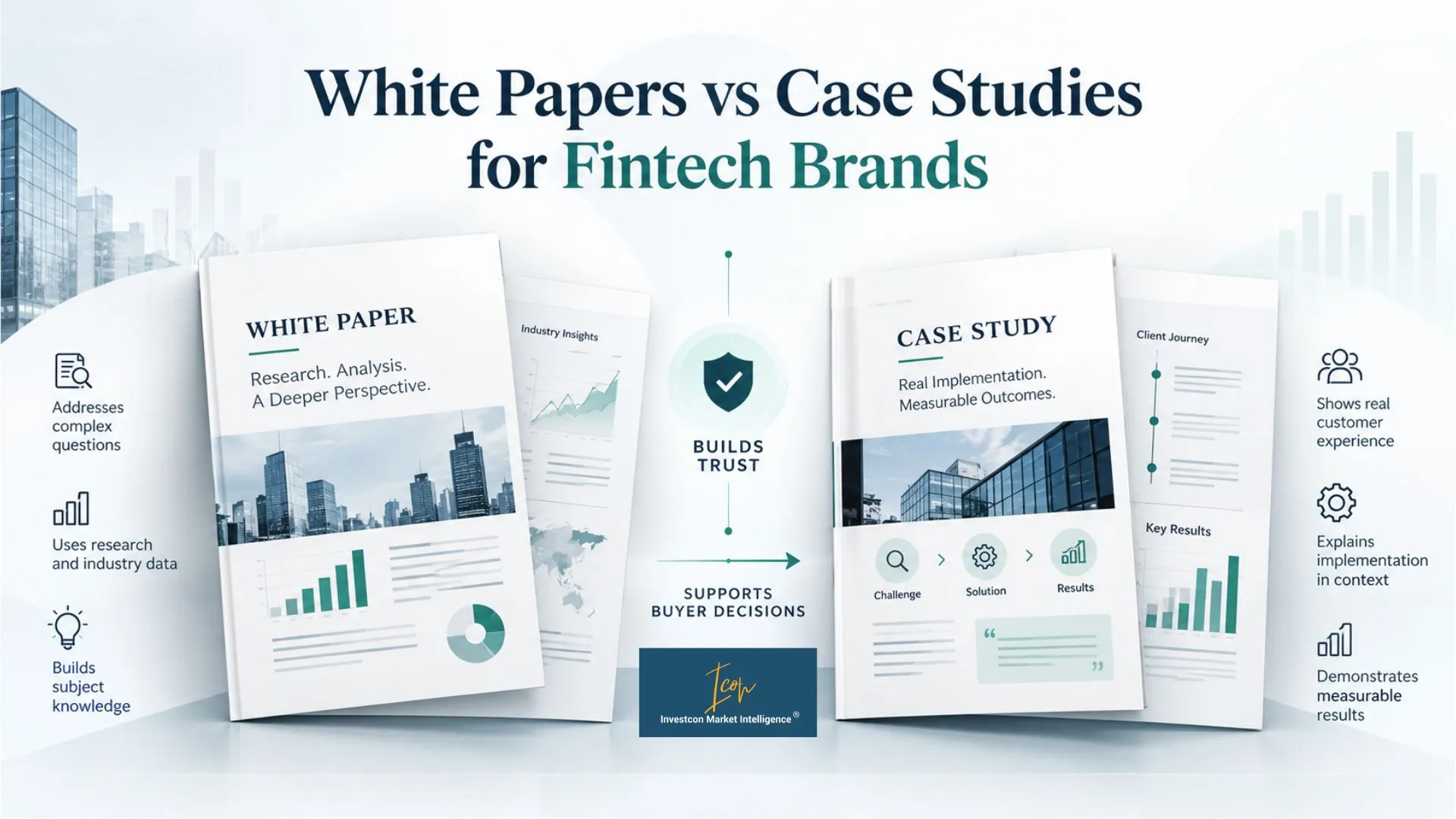
Since case studies and testimonials come from people the audience can relate to, they have greater credibility than claims made by the brand. These should be complemented with quantitative findings wherever possible. The persuasiveness of concrete statistics is far higher.
-
Maintain Consistency Across Platforms
A brand’s tone, facts, and messaging should be consistent across platforms. Whether content is on the website, email, LinkedIn, YouTube, or any other social media, the core brand voice should remain the same. Inconsistency, especially in minor elements, raises questions about whether the brand is accurate.
-
Prioritise Accuracy Over Publishing Frequency
A regular publishing schedule is significantly less important than having the information correct. Include fact-checking, align with current regulatory updates, involve expert review before posting, and purposefully avoid disinformation.
-
Humanise Your Brand with Authentic Story-Telling
Clients are reminded that a financial brand is managed by individuals who share and understand their problems through human content. The intrinsically transactional aspect of financial communication is mitigated by this component.
-
Optimising Content
Strong Search Engine Optimisation (SEO), understandable language, intelligent internal links, useful images, and a pleasant mobile experience make the brand easy to locate and choose. Even the most beneficial financial service can be undermined with poor content.
-
Do Not Only Measure Traffic
Traffic numbers by themselves don’t demonstrate whether or not content marketing is actually fostering trust. More reliable indications include time spent on the website, branded searches, customer referrals, newsletter subscribers, return visitors, and high-quality prospects.
Content Formats that Work Well for Finance Brands
Here are some popular content types that financial businesses can opt for.
. Educational blogs: Since they exhibit depth and consistency over time, blogs gain trust. A well-kept blog serves as a storehouse of evidence that the company is well-versed in its subject.
- Financial calculators and interactive tools: They allow customers to run their own figures, thereby fostering user autonomy.
- White Papers and Industry Reports: These improve credibility and can help establish a brand as an authority rather than simply a service provider.
- Webinars and expert interviews: Face-to-face interactions make the brand more tangible and human to its audience.
- Email newsletters: They help maintain a brand’s presence in a customer’s life.
- Video explainers: Video makes complicated financial ideas easier to understand and retain. It gives the company a human face and voice.
- FAQs and knowledge centres: A well-organised FAQ section shows that a business has anticipated its customers’ problems and is ready to address them right away. This saves clients the time to search for solutions to their questions.
How to Measure if the Content is Actually Building Trust
Vanity measures, such as raw pageviews, might be deceptive. An increase in traffic does not always indicate that readers are trusting the content. A more accurate image is painted by meaningful indicators, as discussed below.
- Quality of organic traffic, not just the volume
- Rate of visitors returning without retargeting
- Growth in newsletters and consistent open rates
- Over time, the volume of branded searches should increase.
- Customers engaging with comments, shares, and responses
- Lead quality, meaning how well leads convert into final orders as they move down the funnel.
- Rate of conversion from educational content to inquiry for service
- Referral traffic from consumers who suggest the brand
- Retention of customers over cycles of renewal
- Testimonials and reviews that demonstrate sincere contentment
Common Mistakes Finance Brands Make
Here are some common content mistakes a finance brand should avoid:
- Publishing excessively promotional information that reads like advertising rather than actual guidance.
- Using complex financial language that alienates readers rather than benefiting them.
- Ignoring compliance and accuracy for greater content volume.
- Making unrealistic financial promises that harm credibility as they fail to materialise.
Bottomline
It takes more than just one campaign or viral content to establish credibility as a financial brand. It results from a persistent dedication to providing clients with truthful, transparent information. Therefore, content marketing for financial services and advisors needs expert writing, well-researched takes, and a thorough understanding of the content landscape. At Investcon, you can get a team of finance content experts with proficiency across platforms. From blogs to reels and YouTube videos, Investcon can be your one-stop solution for all finance content needs.
Visit Investcon Today!
Highlights
- Trust in finance is developed gradually through transparent, instructive, and consistent content at every point of the consumer experience.
- Compared to traditional advertising, a value-first, compliance-friendly approach to content marketing for financial services is significantly more effective.
- To assess content marketing trust, look beyond traffic to signs such as return visits, referrals, and lead quality.
FAQs
1. How is content marketing different from advertising?
Advertising disrupts attention to create a sale, but content marketing attracts attention by first solving a genuine problem, allowing engagement before a sales conversation.
2. How long does it take for content marketing to build trust?
Trust often develops over the medium to long-term. It is based on frequent, consistent interactions across several pieces of information, rather than a single campaign.
3. What type of content works best for financial advisors?
Since advising relationships are particularly reliant on individual reputation, content marketing for financial advisors typically works best when it blends instructional blogs, FAQs, and case studies with a visible, personal voice.

- Before You Invest a Single Rupee: 7 Questions to Ask - October 12, 2026
- Mainboard IPOs in India: How to Evaluate a Mainboard IPO Before Investing - October 12, 2026
- White Papers vs Case Studies: Fintech Trust Explained - October 8, 2026